Laminitis in horses - prevention and cure
Laminitis in horses is becoming a very common condition these days, mostly due to the lush pastures that more and more horses and ponies are being grazed on.
Horses are actually classed as foragers/grazers which means that their digestive systems are designed to cope with a continuous supply of small amounts of roughage at a time. Wild horses have to travel great distances to get enough food to keep them alive as most wild grasses are low in nutrients. In comparison domestic horses are given huge amounts of high nutrient grasses and confined to much smaller areas. This results in a horse who consumes more sugars than it's body can handle - as it's not burning them off with movement - and this is often the main cause of laminitis in horses.
Also many stable kept horses are given large amounts of grain in one feeding and then left for many hours with nothing in their stomach. This is also very disruptive to the digestive system and can contribute to laminitis.
Definition of Laminitis in Horses
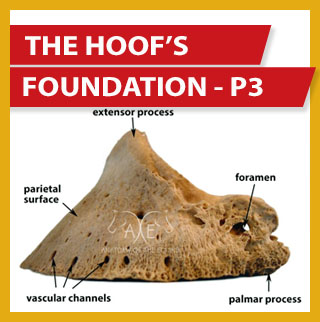
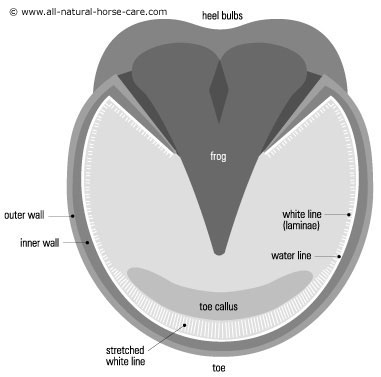
Laminitis is inflammation of the sensitive structures in the hoof called the lamellae. The lamellae are the means by which the coffin bone is held tight within the hoof capsule. When viewing the sole of a healthy hoof you can tell how good the connection is by looking at the white line. If the white line is tight (narrow in width) then there is a strong connection. If the white line is stretched then the connection is compromised - see diagrams below. Untreated laminitis often leads to Founder which is where the bone becomes detached from the hoof capsule and in severe cases will penetrate through the sole.
|
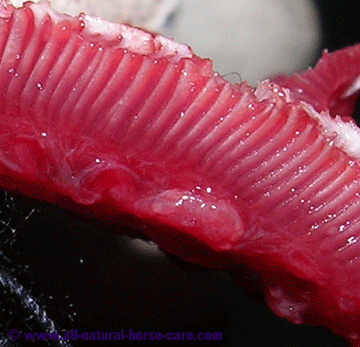
Laminitis in horses is referred to as acute when it is in the early stages and chronic when it has been present for a long time. The photo to the left shows a slice through the corium and laminae - the corium is on the bottom side of the photo and the laminae on the top. The corium was attached to the coffin bone and the laminae connect the coffin bone to the hoof wall. |
Healthy hoof with tight white line
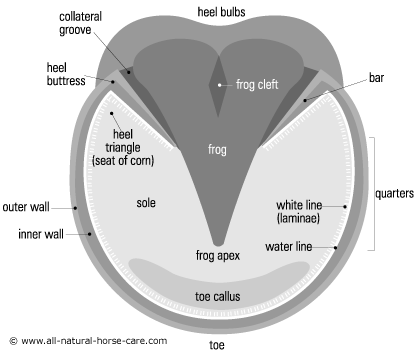
Laminitis in horses occurs when the lamellae become inflamed and produce a secretion full of toxins which weakens the connection between the coffin bone and the hoof wall. This leads to a stretched white line which is visible when looking at the sole of a horse with chronic laminitis.
The video below shows laminitis leading to founder in action over a four week time period. Notice how the distance between the hoof wall and the coffin bone gets longer and also how the coffin bone sinks down within the capsule.
Laminitis in Horses - hoof with stretched white line
In the diagram below the white line is stretched at the toe:
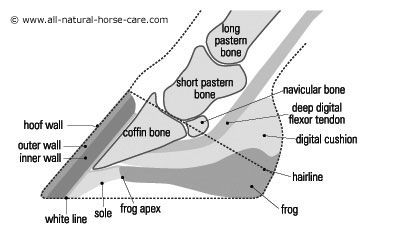
Side view showing a tight white line
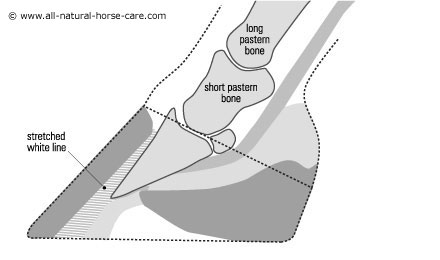
Side view showing a stretched white line
Here you can see how the connection with the coffin bone has weakened and rotation of the hoof capsule has occurred.
Photos of hooves with laminitis
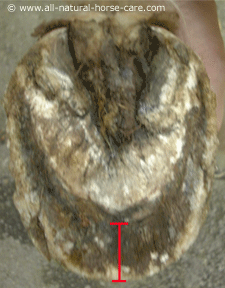
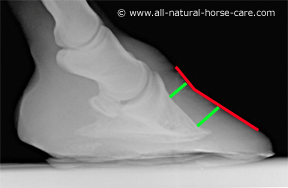
The hoof above left, shows a stretched white line (indicated by the red markings) and the xray on the right shows how the coffin bone has rotated away from the hoof wall (marked in red) - the bottom green line is longer than the top one.
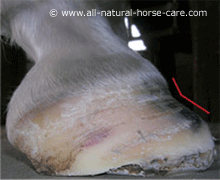
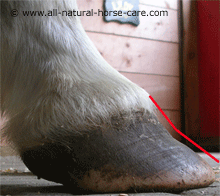
These two photos show the hoof trying to heal itself by growing in a tighter connection at the top. The difference in the hoof wall angle (highlighted in red) is a clear indication of rotation of the coffin bone.
The hoof in the photo on the left also has white line disease, which is common when laminitis is left untreated for extended periods of time.
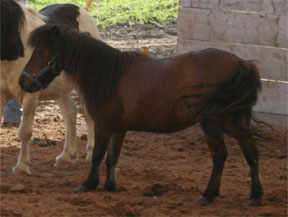
Symptoms of Laminitis in Horses
|
 |
Prevention of Laminitis in Horses
Laminitis is very painful and debilitating so preventing it is very important. This is achieved by first looking at your horse's lifestyle so that you can identify potential triggers and remove them.
If grass is the trigger then there are ways that you can limit the amount your horse/pony eats:
- Create a dry lot (with little or no grass) and feed low sugar grass hay instead (you need to have it tested to ensure that it is low sugar or soak in clean, warm water for 30 minutes before feeding to reduce the sugar levels if unsure.)
- Install some slow feeders to slow down the hay consumption.
- Buy a grazing muzzle which still allows the horse to graze and be with it's herd but limits how much is consumed.
- Create a track around your field so that the horses have to move more to get their fill.
If grain is the trigger:
- Stop feeding grain - switch to sugar beet (beet pulp) with no molasses if your horse needs more than just grass or grass hay
- If
you really feel that your horse can't go without grain, then feed it in
smaller quantities more often, rather than one big feed
If the trigger is mechanical:
- Make sure your horse's feet are trimmed correctly - high heels and long toes are often major contributors to mechanical laminitis
- Ensure
that you condition your horse properly. Start slowly so that you allow
the muscles and tendons time to strengthen before doing strenuous
exercise
Other ways to help:
- Movement is important to a horse prone to laminitis as it increases blood circulation which in turn flushes out the harmful toxins - however you should never force a laminitic horse to move
- A herb that is helpful in improving circulation is Jiaogulan (gynostemma pentaphylla)
If your horse or pony has a cresty neck or fatty deposits it may have a magnesium deficiency so add a magnesium supplement to its food to rectify this. This is also often a symptom in Insulin Resistance and/or Cushings disease - click here for more info
Laminitis in Horses - Road to Recovery
Once you have addressed all the laminitis triggers (ie removed the cause) you can start to deal with the recovery. It is crucial to get a proper trim which will allow the hoof to start healing and growing in a tight connection between the coffin bone and hoof wall.
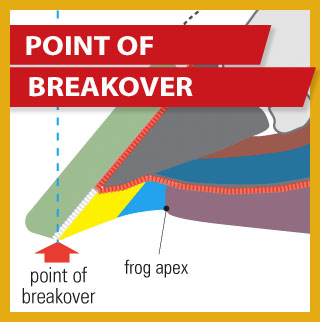
Often when separation occurs the toes become too long which puts even more strain on the already weak laminar connection. Long toes delay breakover (the point at which the hoof leaves the ground) which in turn rips the wall further away from the coffin bone - compare it to when your nail is bent back and pulled away from the nail bed and imagine how painful it is to the horse who has to also bear weight on it. It is therefore, very important to bring the toes back to the correct location to relieve the strain. See article on the Toe Rocker for more information on where this should be.
High heels also add to the problem as they increase the mechanical stress on the laminar connection. They prevent the frog from being weightbearing which means that the hoof wall has to take even more weight.
To make the horse more comfortable, pads or boots may be used - see Pete Ramey's article on the benefits of boots and pads. However, bear in mind that the coffin bone needs to stay close to ground parallel (3-5 degrees depending on the trim method used) so the pads should not raise the heels. Rubber mats are also very useful as they have some give to them. Avoid deep straw or shavings beds (unless the horse is lying down a lot) as these allow the toe to sink (effectively raising the heels) which in turn puts pressure on the lamellae.
Pete Ramey also has an very informative article on laminitis. Click here to read it.
For more information on grass and it's role in laminitis visit Katie Watts' Safer Grass website.
New Equine Laminitis eBook
|
This comprehensive equine laminitis eBook will enable you to discover the vital information you need to know to help heal your horse now. This is THE reference guide for every horse owner who is struggling to help their horse to recover from the devastating effects of laminitis and founder. Written in clear, simple language that is easy to understand and implement for both beginners and experienced horsepeople alike. It will teach you everything you need to know about laminitis plus give you practical ways to prevent, treat and manage the laminitic equine using safe and effective, natural methods. Click here for more information and to order now. |


%0A%C2%A9%20www.all-natural-horse-care.com)


Laminitis Success Stories
Click here to read success stories about horses and ponies who have survived laminitis or founder, or to submit a success story about your horse.