Horse Hoof Boots - protection for shoeless horses
There is a huge range of horse hoof boots for available these days, that offer almost every horse a viable alternative to metal horseshoes. They are designed to provide extra protection for your un-shod horse without restricting the hoof like metal shoes do.
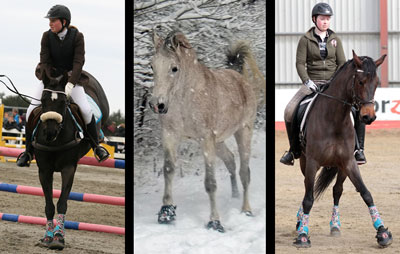
Why do horses wear hoof boots?
It may be necessary to use hoof boots for a while when you first start transitioning your horse to go barefoot. Often a newly de-shod foot is not able to cope with the varying surfaces you may encounter when trail riding or during turnout so boots are used to make the horse more comfortable until the hoof has built up condition.
They can also be used to make a horse more comfortable when they are suffering from hoof issues such as abscesses, laminitis/founder or navicular.
Another scenario where horse hoof boots are useful is if you keep your horse on a soft terrain but want to ride on hard, abrasive terrain. It is not fair to expect the hoof to cope with the harder terrain when it hasn't been conditioned to it, but by using hoof boots you can overcome this issue and keep your horse comfortable.
Hoof boots vs shoes
Metal shoes were initially designed as a way to protect hooves from the excessive wear caused by travelling on abrasive surfaces, at a time when horses were also being confined to small areas that forced them to spend long periods of time standing in their own excrement. The practice continues today, as unfortunately many horses still live in similar conditions for all or part of the day and so their hooves are less robust than they should be.
Wild horses on the other hand are continually moving forwards in their search for food, so never stand in feces or urine-soaked bedding, and do so on terrain that their hooves evolved to cope with so they can cover great distances without the need for extra protection.
Hoof boots were designed to provide a bridge between those two worlds, as many horses that are now being more naturally kept have previously worn metal shoes that weakened their hooves and aren't able to get enough movement over varied terrain on a consistent basis for their hooves to be able to withstand the wear when we ride or drive them.
Hooves are designed to flex and distort in order to absorb impact and provide traction. When a metal shoe is nailed onto the hoof, it prevents the hoof from performing those natural functions and over time that can have many negative consequences as the structures that are designed to absorb shock, degenerate from lack of use. The nails also weaken the hoof wall and the blood flow within the hoof is also affected. Research by Dr Bowker indicates that sole stimulation is very important
as it helps increase blood flow to micro-vessels in the hoof.
Horse hoof boots are not directly attached to the hoof and so they allow it to function more naturally. Not all hoof boots are the same though. Many have hard, rigid soles which limits the hoof's ability to absorb shock, and prevents the horse from sensing and adapting to uneven ground. Over time this will also have a negative impact on the internal structures.
What are hoof boots used for?
Equine hoof boots can be used for all types of riding, both English and Western styles and including trail riding, jumping, dressage and endurance as well as for driving, rehabilitation and turnout. They are also used on miniature therapy horses to provide traction on slippery surfaces that are often encountered in care homes. They come in a wide range of sizes to fit miniature horses, ponies, horses, donkeys, mules and medium-sized drafts.
They can also be used to increase traction in slick mud or icy conditions as most brands allow metal studs to be attached.
Horse Hoof Boot Comparisons
In general, they fall in to three groups:
- horse hoof boots designed for soaking the hoof;
- ones for rehabilitation and turnout use; and
- ones designed for riding/driving.
The last category is also further divided into two types:
- enclosed design - very secure fit as the upper of the boot completely encases the hoof and short pastern
- sandal/open design - very streamline and does not hold water
How to choose the best hoof boot for your horse
There are many factors to consider when choosing a brand of hoof boots for your equine. Each brand and model of boot has different parameters, each horse has specific requirements, and each owner has differing tastes and needs.
Important factors to consider:
Hoof size and shape - This is going to be the number one consideration as not all brands are suitable for every hoof. Getting accurate hoof measurements is vital when shopping for hoof boots. If the hooves are distorted and undergoing rehab then you may need to purchase two different size boots to ensure they will fit throughout the trim cycle.
Use - Some brands are better suited to specific uses so this is an important factor to consider. A rehab boot has to be much more fit forgiving than a riding boot for example.
Ergonomic design - the boot should be designed so it fits well around the soft tissues of the horse so as to not cause rubs or sores. Some of the cheaper brands are not ergonomically designed and have a squarer shape which is uncomfortable for the horse and will require the use of additional accessories, which will bump up the price.
Material - The material of the upper should have some flexibility to it so that as the pastern is weighted the upper part of the boot can flex with it.
Sole - The sole needs to be flexible and provide good traction.
Ease of Use - If you or your horse have any health conditions that might interfere with how easily you can get the boots on, that should also be taken into account.
Revolutionary sole
Up until 2011, most of my experience had been with the Boa's, Old Macs and Easyboot Epics. However all of these boots have a rigid sole which whilst it is better than regular horseshoes, still does not allow the hoof to function as naturally as it should. My horse Tuffy was still not 100% comfortable on some surfaces in these types of boot even with extra padding.
The therapy and riding groups have since been revolutionized by the
introduction of the rubber-soled hoof shoes made by Equine Fusion. I was instantly sold on the concept of these boots. Tuffy moved so much better in them and would happily go over any surface. He liked them so much that I became a dealer back in 2012. Having sold thousands of pairs since I know them inside out and they have proven themselves to be fantastic therapy and riding boots.
The Equine Fusion Jogging Shoes fall into the enclosed design category which makes them very secure on the hoof and suitable for a wide range of hoof shapes. This makes them particularly good for rehab as they don't rely on an ideal hoof shape to stay on. Also, their rubber sole not only absorbs more shock than metal and plastic soled boots but also stimulates the hoof which allows it to regain full natural function, and improves traction.
In 2018 another flexible boot came on the market, the Flex Boots. They fall into the sandal/open category and are made of a totally flexible plastic so also do not restrict the hoof in any way. They are extremely lightweight and are very streamline on the hoof. They do require a healthier hoof shape to stay on though and the sole is a bit thinner so they are better suited to healthier hooves.
The Jogging Shoes come in either a regular or slim version and the Flex come in a regular or wide version, so between the two brands there is a boot to fit almost every hoof, from narrow to wide hooves, from mini to small draft.
Therapy Boots - for Hooves Undergoing Rehab
These boots for horses are primarily aimed at hooves that need extra protection and padding due to injury or illness. Some are a suitable hoof boot for horse turnout - although this should be in a limited area so as to lessen the chance of the horse loosing the boot. Particularly useful a horse or pony with laminitis and/or abscesses.
|
Recovery Jogging Shoe 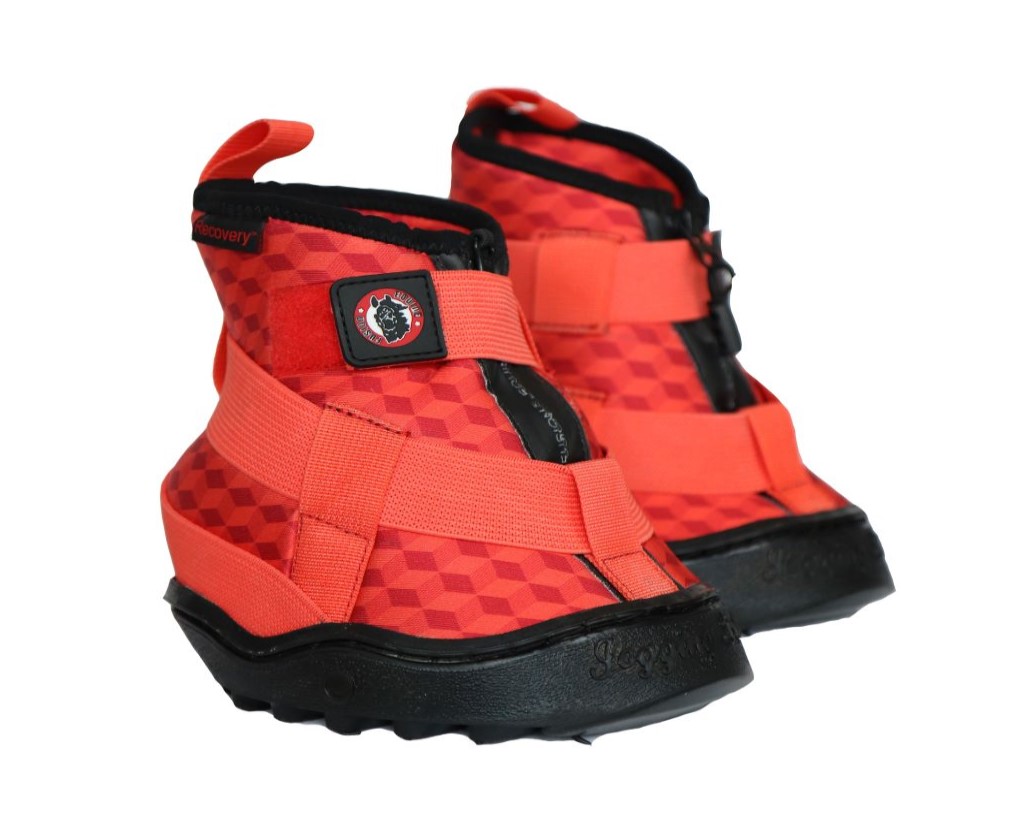 |
All Terrain Ultra Jogging Shoe 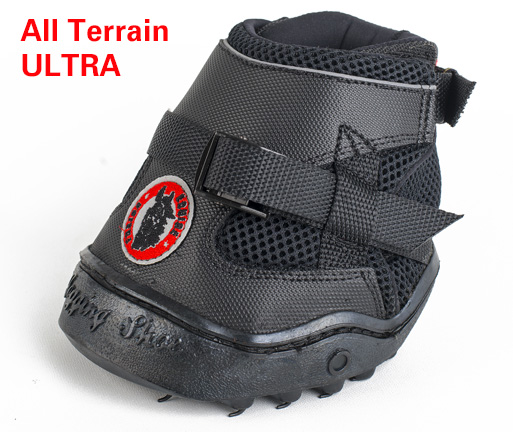 |
24/4 Jogging Shoe 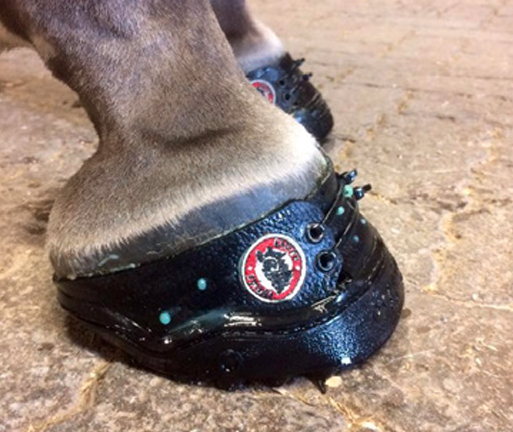 |
Riding Boots
This section includes barefoot riding boots for trail riding and arena work. Some of these boots, such as the Equine Fusion AT Ultra Jogging Shoe, can also be used for turnout. Equine hoof pads can be put in the boots to give the horse additional hoof protection.
|
AT Ultra Jogging Shoe |
Active Jogging Shoe 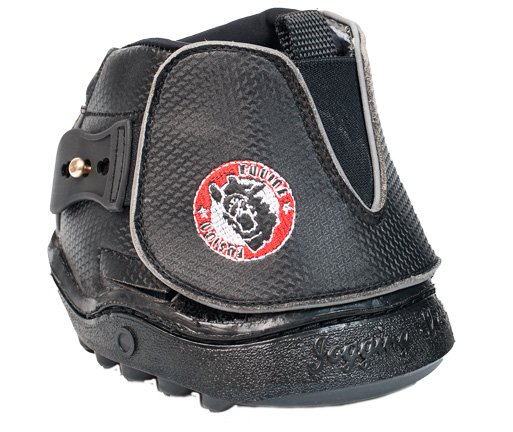 |
Flex Hoof Boots 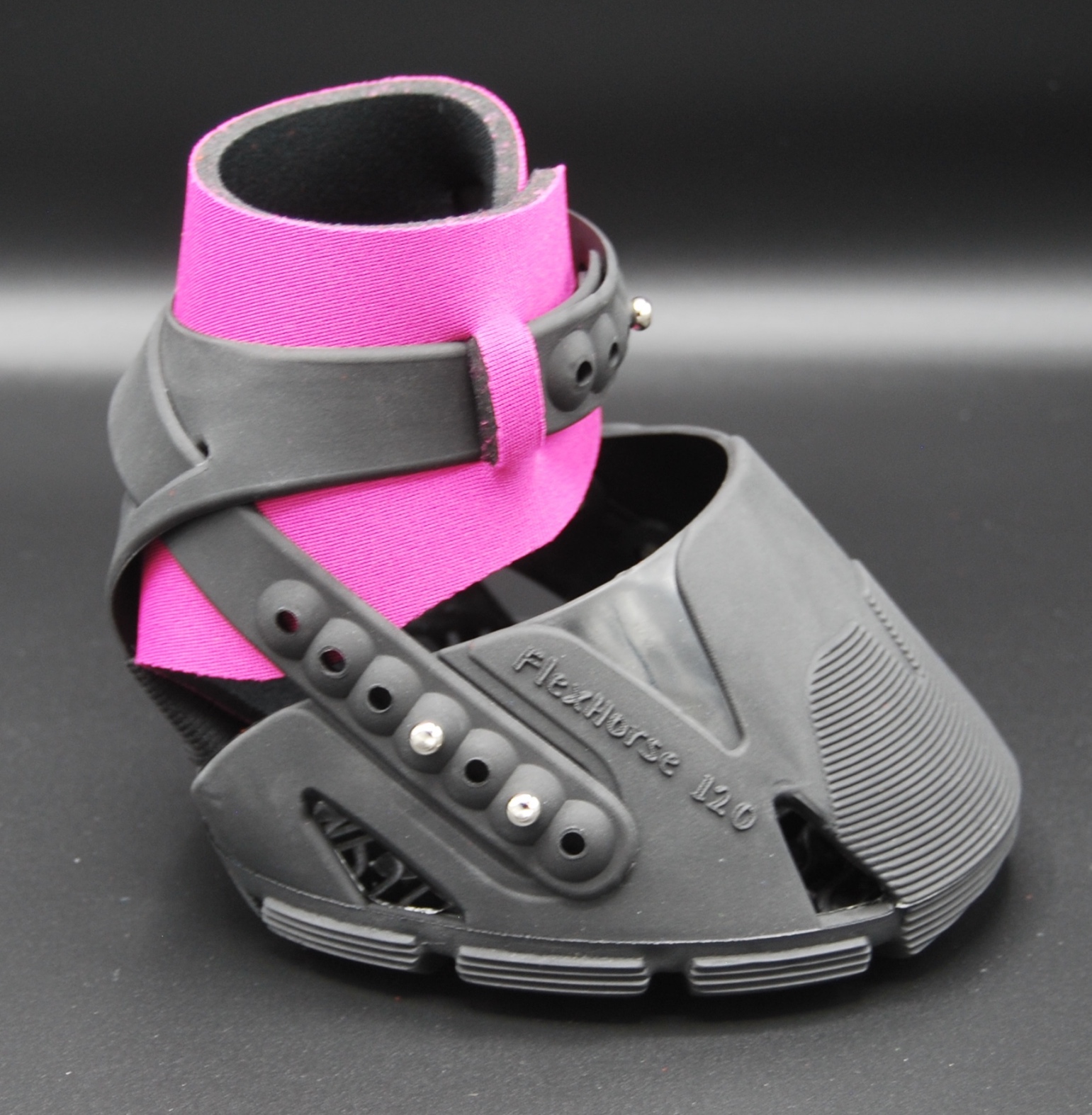 |